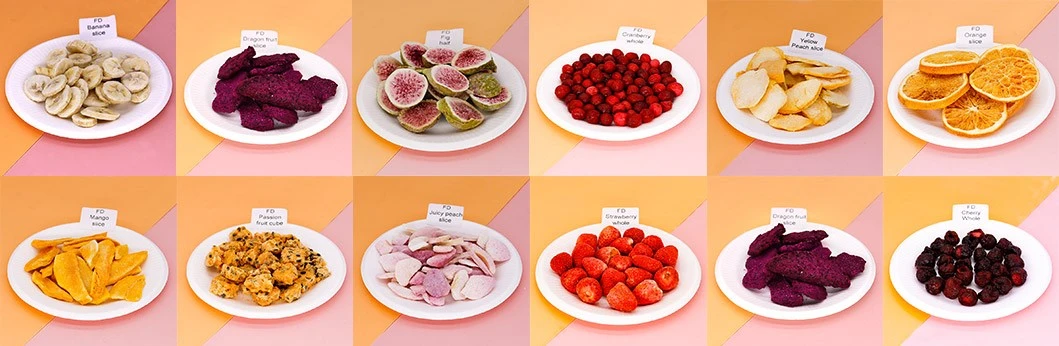
Recently, a friend asked me: Someone gave me freeze-dried fruit snacks, and my child fell in love with them as soon as they ate them. It's said that fruit should be eaten fresh. Once processed, there's not much nutrition left. Even if dried fruit still retains dietary fiber and minerals, at least vitamins and health components are lost, right? Is freeze-dried fruit a waste of money? It sells so expensive, can it really supplement nutrition? Is this kind of snack considered a healthy food when given as a gift for the New Year?
In fact, if it's inconvenient to eat fresh fruit, or if you don't eat enough, or if you have other concerns, you can still use freeze-dried fruit to supplement fruit nutrition. Of course, it's also quite delicious as a snack. Today, let's introduce and analyze freeze-dried fruit, which has become increasingly popular in the past two years. Is it really a healthy food?
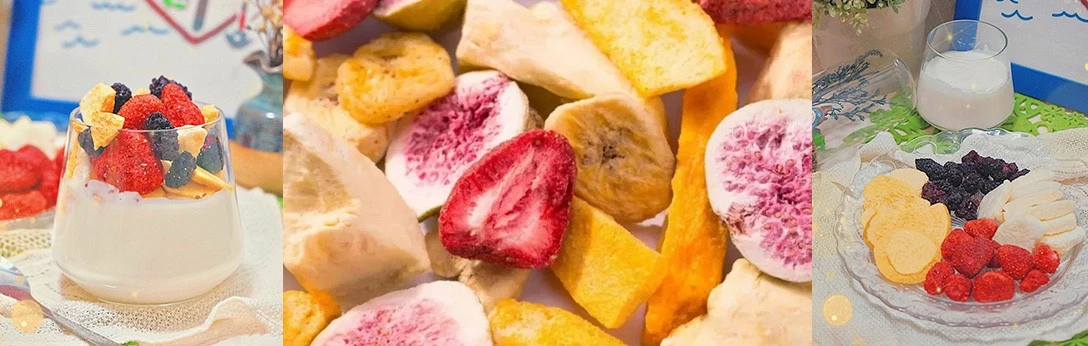
How is Freeze-Dried Fruit Made and Why Is It Relatively Expensive?
So-called freeze-dried fruit is made using the vacuum freeze-drying process. Normally, drying food relies on heating. Why can food still be dried in a frozen state? Those who have studied physics know that water has a three-phase curve. In a frozen state, a small number of water molecules can directly escape from the ice and become water vapor. This change is called sublimation.
Vacuum freezing equipment first freezes the fruit to a low temperature of minus 30 to 40 degrees Celsius, filling the food with many tiny ice crystals. Then the air is pumped out to reduce the air pressure. The water vapor sublimated from the ice crystals is also continuously pumped away, so the ice-gas two-phase equilibrium tends to produce more water vapor.
In this way, the ice crystals in the food continuously turn into water vapor at low temperatures. After dozens of hours, the food becomes dry.
Because the ice crystals turn directly into vapor without going through the liquid water state, they quietly leave the food matrix, leaving many voids inside the food, resulting in a crispy texture when eaten.
It requires both freezing and vacuum pumping, so this process is very power-consuming, and the cost is higher than dehydration processing methods such as sun drying, hot air drying, infrared drying, microwave drying, and low-temperature frying.
However, where there's investment, there's also gain.
Freeze-Dried Fruit Preserves Nutrients Well: "Vacuum Pumping" Prevents Oxidation, "Low Temperature" Protects Heat-Sensitive Vitamins
Vacuum pumping solves the problem that many nutrients and antioxidant components are easily oxidized during processing. For example, nutrients such as vitamin C, vitamin A, vitamin E, folic acid, and antioxidant components such as anthocyanins, flavonoids, and carotenoids are all prone to oxidation.
Low-temperature freezing solves the problem that some vitamins and phytochemicals are sensitive to heat. As we all know, vitamins such as vitamin C, vitamin B1, and folic acid are heat-sensitive. Health components such as anthocyanins and glucosinolates are also heat-sensitive.
Since there's no cooking, there's no loss of water-soluble healthy components such as vitamin C, various B vitamins, anthocyanins, flavonoids, and chlorogenic acid through leaching into water.
Since there's no frying, there's no problem of loss of fat-soluble healthy components such as carotenoids and vitamin K through leaching into oil.
Because it's sufficiently dry, it can inhibit the growth of microorganisms, so no preservatives are needed.
Note: Freeze-Dried Fruit Prone to Moisture Absorption; Don't Confuse It with Low-Temperature Fried Fruits and Vegetables or Sugared Dried Fruit Products
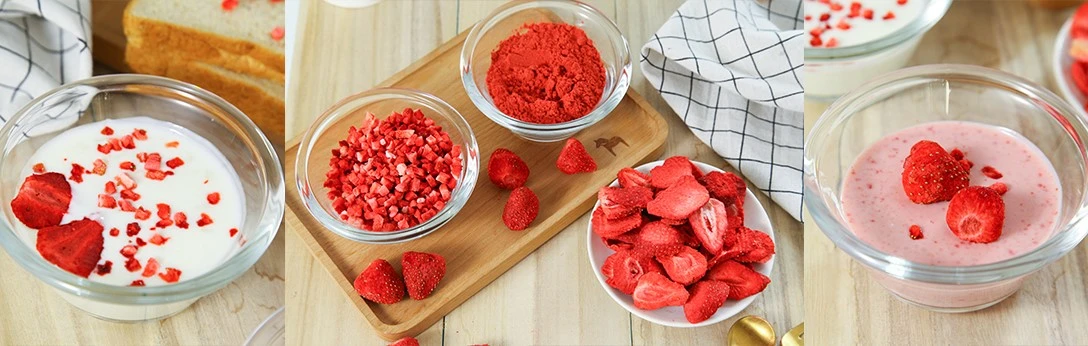
However, due to its porous structure, vacuum freeze-dried food is very easy to absorb moisture. Porous foods, if left at room temperature for a long time and exposed to oxygen, will also oxidize relatively quickly.
Therefore, freeze-dried foods are usually packaged in vacuum nitrogen-filled, light-proof and oxygen-isolated packaging. You should eat it quickly after opening the package.
It's also necessary to remind that many people mistake low-temperature fried fruit and vegetable chips for freeze-dried fruit and vegetable products. In fact, they are completely different.
Low-temperature fried fruit and vegetable chips are produced by frying under vacuum. Vacuum pumping reduces the pressure, and according to the laws of thermodynamics, the boiling point of oil will be greatly reduced at this time, even below 100 degrees Celsius.
This low-temperature frying method can greatly reduce the oxidative polymerization of oil, avoid the production of carcinogens such as benzopyrene, reduce the speed of Maillard reaction, maintain the original color of fruits and vegetables well, and reduce the loss of fruit and vegetable aroma due to heating.
However, it is still a heating method that increases the temperature, and it will inevitably cause vitamin loss. The large amount of oil will also cause loss of some carotenoids and chlorophyll.
Most importantly, low-temperature frying greatly increases the fat content in fruit and vegetable foods.
As we all know, fruits and vegetables are classic low-fat foods, and the fat content of most fruits does not exceed 1%. However, once made into low-temperature fried "fruit crisps", the fat content can reach more than 10%, even up to 30% at the highest, turning it into a high-calorie, high-fat product! Therefore, when buying dried fruit and vegetable products, please open your eyes and carefully check the ingredient list and nutrition facts table.
Crispy fruit and vegetable slices are not necessarily freeze-dried products. If the ingredient list contains the word "vegetable oil" and the fat content in the nutrition facts table is very high, it must not be freeze-dried fruit, but a low-temperature fried product.
In addition, you should also check whether there are various sugars and sweeteners in the ingredient list. Unless some particularly sour fruits (such as seabuckthorn, roxburgh rose, lemon, cranberry, etc.) need a little sugar for seasoning, otherwise, the ingredient list of freeze-dried fruit should ideally only contain "a certain fruit" as the only ingredient. Such products have the highest nutrient density.
Comparison of Different Dried Fruit Processing Methods
| Processing Method | Nutrient Retention | Fat Content | Requires Preservatives | Cost | Texture |
| Freeze-drying (Vacuum freeze-drying) | Excellent: Most vitamins, antioxidants and other nutrients are well preserved, no water/oil soluble loss | Low (<1% for unsweetened pure products, same as fresh fruit) | No (sufficient dryness inhibits microbial growth) | High (high energy consumption) | Crispy, porous |
| Low-temperature frying | Poor: Significant vitamin loss, partial loss of carotenoids/chlorophyll | High (10%-30%, becomes high-calorie product) | Usually not required | Medium | Crispy, greasy |
| Traditional sun drying/hot air drying | Medium: High heat causes serious vitamin loss, oxidation of antioxidants | Low | Often requires added preservatives | Low | Chewy, tough |
Suitable for People with Gastrointestinal Problems, Small Appetites, and Busy Workers
Who is freeze-dried fruit suitable for?
First - people with poor gastrointestinal function
Vacuum freeze-dried fruit is more friendly to the gastrointestinal tract, solving problems such as fear of cold when eating fruit before meals, fear of coolness when eating fruit in the morning, and fruit hurting the stomach. At the same time, it largely avoids the nutrient loss and additional sugar brought by cooked fruit.
For example, my intestines are relatively sensitive. After eating a fresh apple, my stomach gurgles and I have borborygmus. When I eat sun-dried apple slices, they are very chewy and hard to digest, making my stomach uncomfortable. But eating one or two handfuls of freeze-dried apple slices doesn't cause these problems.
One possible reason is that after freeze-drying, the apple slices form a loose and porous structure, which allows digestive juice to fully contact them, making them easier to digest.
The second reason may be that after freeze-drying and storage for a period of time, most of the proteases in fresh fruit are inactivated, reducing damage to the mucosal surface of the digestive tract.
The third reason is that you don't need to eat a whole freeze-dried fruit. Eating a small handful or a small bag at a time means the total amount is limited, so it won't cause trouble to the intestines.
Second - people with both large and small appetites
We often hear people complain: "My appetite is small, I can't finish a large Fuji apple at one time, and I can't store the remaining half." Others say: "I'm too greedy, I can't stop eating various snacks, and I'll get fat if I eat too much."
Freeze-dried fruit as a snack can solve these problems. Because each package of freeze-dried fruit is small in portion and relatively expensive, it's unlikely to eat too much. And replacing biscuits, pastries, potato chips, etc. with small packages of freeze-dried fruit has much lower calories. It's both healthy and delicious, and can avoid overeating.
Third - people with busy daily work
For people who are particularly busy with work, they may not have time or simply forget to buy and eat fruit in daily life. Some people also find it inconvenient to carry fruit to work. For all these problems, freeze-dried fruit is a good choice. You can eat it right after opening the package, anytime. You can eat it all year round, and the nutritional value is very close to fresh fruit. As a healthy snack, it's a very good choice. It's better than low-temperature fried fruit and vegetable chips, and much better than biscuits, cakes, potato chips, etc.
In conclusion, freeze-dried fruit without added sugar is a good thing and is relatively healthy as a snack. Its main problem is the relatively high cost. Whether to choose it depends on whether you can eat enough fresh fruit and your perception of cost-effectiveness.