


Global per capita spending on freeze-dried foods is increasing, primarily driven by growing demand for convenient, long-lasting, and nutritionally preserved food products. This category includes snacks, fruits, meals, and emergency preparedness products, attracting health-conscious consumers, outdoor enthusiasts, and busy families.
As demand for lightweight, long-shelf-life, and nutrient-dense food products grows in both developed and emerging markets, global trade in freeze-dried foods is expanding. Freeze-dried products such as fruits, vegetables, meats, dairy products, and ready-to-eat meals are in high demand in sectors like outdoor recreation, emergency preparedness, and healthy snacks.
Freeze-drying dehydration technology enables long-term preservation of fruits, which was originally developed for harsh environments such as space travel, military supplies, mountaineering, tourism, exploration, and mining, but has now gradually become a common ingredient in restaurants and households. Today, freeze-dried fruits command a premium in the international market, with prices 4 to 6 times higher than hot air-dried dehydrated fruits, firmly holding their position as a major bulk fruit in international trade.
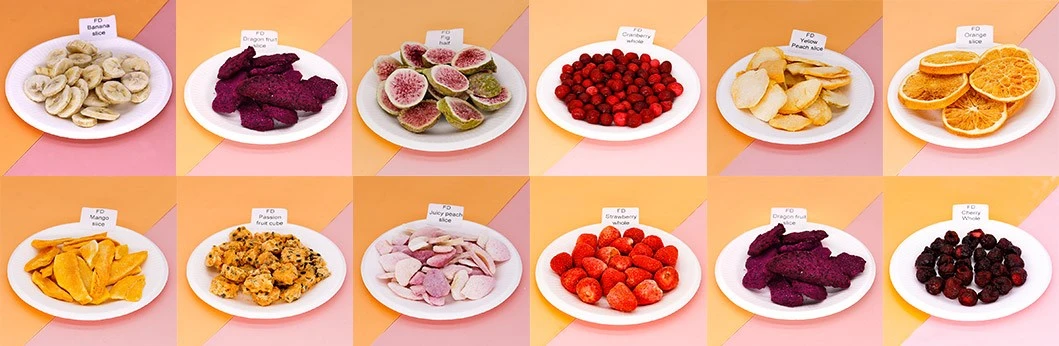
Freeze-dried fruit is an innovative product made from fresh fruit raw materials through pretreatment, quick freezing, and vacuum dehydration. It perfectly retains the original color, aroma, taste, and shape of the fruit. In a vacuum environment, water sublimates directly from solid ice to gaseous state, achieving dehydration drying. This unique processing method allows freeze-dried fruits to be stored for a long time at room temperature without deterioration, even without refrigeration equipment. At the same time, it maximally preserves key nutrients such as vitamins and proteins in fruits.
Freeze-dried fruits still retain part of their vitamins, but the content may vary depending on the fruit type and processing technology. Freeze-drying reduces the loss of heat-sensitive nutrients through low-temperature dehydration. Vitamins C and A remain relatively stable, but water-soluble vitamins (such as some B vitamins) may be lost during pretreatment or dehydration steps. The overall nutritional value is lower than fresh fruits, but still higher than high-temperature dried or fried dried fruits.
I. Effect of Freeze-Drying Technology on Vitamins
1. Low-temperature dehydration preserves heat-sensitive vitamins
During the freeze-drying process, fruits are frozen at -30°C to -50°C, and then water is directly sublimated (solid → gaseous) in a vacuum environment, avoiding the destruction of heat-sensitive components such as vitamin C and vitamin A by high temperature. Studies show that the retention rate of vitamin C in freeze-dried fruits is usually 70%-90%, much higher than traditional drying (retention rate about 30%-50%).
2. Risk of loss of water-soluble vitamins
Some water-soluble vitamins (such as vitamin B1 and B2) may be lost with water during pretreatment stages such as washing and slicing, or oxidatively decompose when exposed to air after freeze-drying. For example, the vitamin B1 content in freeze-dried strawberries may be reduced by about 15%-20% compared to fresh strawberries.
II. Retention Differences Among Different Vitamins
| Vitamin Type | Retention Rate | Key Notes |
|---|---|---|
| Vitamin C | 80%-90% (less than 20% loss) | Better protection in acidic fruits (kiwi, oranges); further degradation may occur if stored improperly (light, high temperature) |
| Fat-soluble vitamins (A, E, K) | 80%-95% | Relatively stable to temperature and oxidation; β-carotene (vitamin A precursor) content in freeze-dried mango is close to fresh state |
| B vitamins | 70%-90% (10%-30% loss) | Loss occurs due to water solubility; vitamin B6 in freeze-dried bananas may decrease by about 25% |
III. Limitations of Freeze-Dried Fruits
1. Cannot fully replace fresh fruits
After dehydration, the sugar and calorie density of freeze-dried fruits increases, but dietary fiber and minerals (such as potassium, magnesium) are basically retained. The total vitamin content is still lower than that of fresh fruits, especially for short-term consumption berries (such as blueberries, raspberries).
2. Impact of processing and storage
- Pretreatment: Blanching or sterilization may destroy some vitamins.
- Packaging: Vacuum or nitrogen-filled packaging can reduce oxidation, while transparent packaging may lead to decomposition of photosensitive vitamins (such as vitamin B2).
- Rehydration: After rehydration, some freeze-dried fruits have a taste close to fresh, but water-soluble vitamins may be further lost.

IV. How to Reasonably Choose and Consume
- Prioritize pure freeze-dried products without additives, avoiding extra ingredients such as sugar and oil.
- Pair with fresh fruits to make up for the nutrients lost during the freeze-drying process.
- Store in a sealed, dark place; consume as soon as possible after opening to reduce nutrient loss caused by oxidation and moisture absorption.
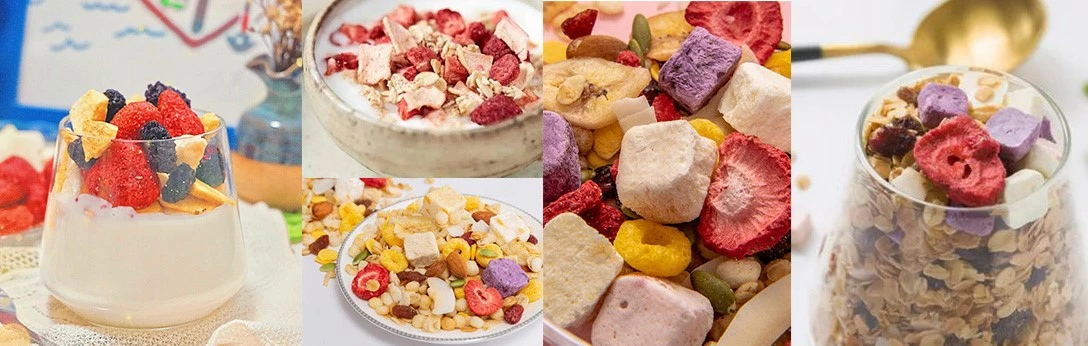
- Freeze-dried fruit can be used as a portable snack or dietary supplement, but a balanced diet should still be based on fresh fruits and vegetables.
